by Stephen Sandoz

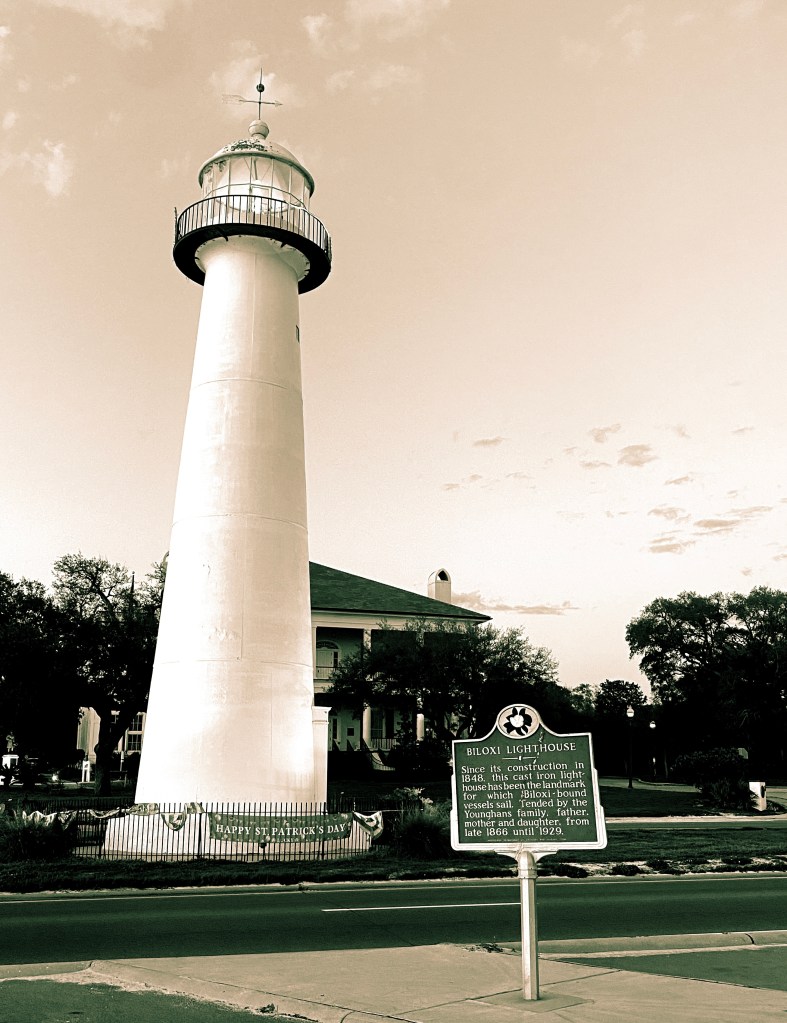
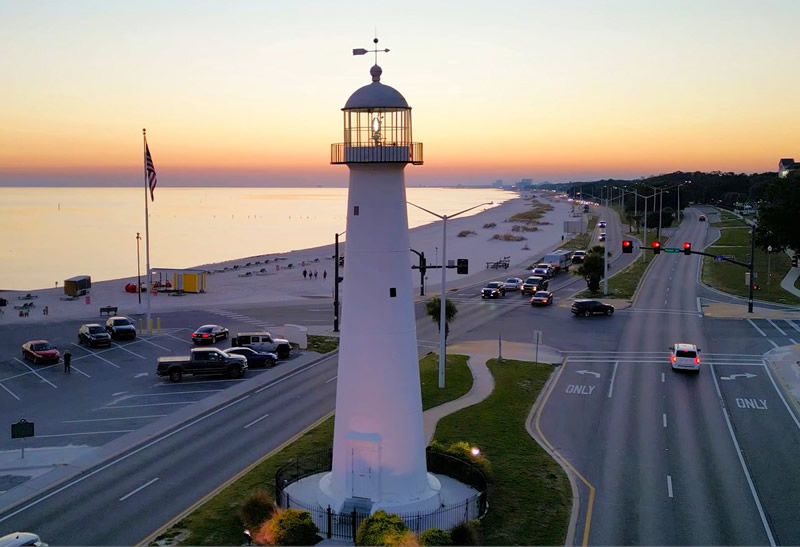
It’s a hot summer afternoon in Biloxi. The sky is a deep blue. A warm breeze drifts over the water. Children are playing nearby. Footsteps from the sandy beach, a lone man gazes up at the white lighthouse that sits prominently between the east and westbound lanes of highway 90.
Constructed in 1848, the 60-foot-tall structure has long been considered a symbol of the resilience of the Mississippi Gulf Coast and its people. Hurricane Camille could not bring it down in the 1960s and even after a 20 plus foot storm surge from Hurricane Katrina in 2005, the lighthouse still stood.
Two decades have passed since “the storm” washed ashore in Biloxi. None of the students in the local schools were alive when it happened and will learn about it only from history lessons and the stories from their parents and grandparents. People who saw Katrina firsthand share a certain kinship. Ask any one of them and they can still you what they saw, heard and felt in vivid detail, even twenty years on. Like the Kennedy Assassination, moon landing or 9/11, it’s the kind of event that sticks with those who watched it happen.
When you talk to Katrina survivors, they won’t just tell you about the wind and the water. They’ll tell you about the brutally hot days that followed the storm (no air conditioning due to power outages), the long lines for food, fuel and ice, the complete lack of any available restaurants or local amenities, the seemingly endless frustration of dealing with FEMA and other relief agencies. The incredible challenge of merely keeping oneself alive through days of chaos.
You’ll also hear about the frustration they felt about the lack of TV cameras as the eyes of the world stayed fixated on New Orleans. During coverage of Hurricane Isaac in 2012, a Weather Channel reporter famously referred to Mississippi as “the landmass between New Orleans and Mobile”. That phrase has since become something of a running joke among Mississippians and a great example of how frequently national media often overlooks this state during major events.
But it’s safe to say the lack of attention stung a little more in the case of Katrina. New Orleans suffered a tragedy to be sure, but the sheer volume of that tragedy drowned out the voices of thousands of Mississippians that were screaming for help too. Across the three coastal counties, it’s easy to find Katrina survival stories just as harrowing as those from the Big Easy.
Most of the children of Katrina are adults now and some even have families of their own. They will probably never fully understand what happened on August 29th, 2005, because the enormity of it is difficult to grasp if you didn’t see it with your own eyes.
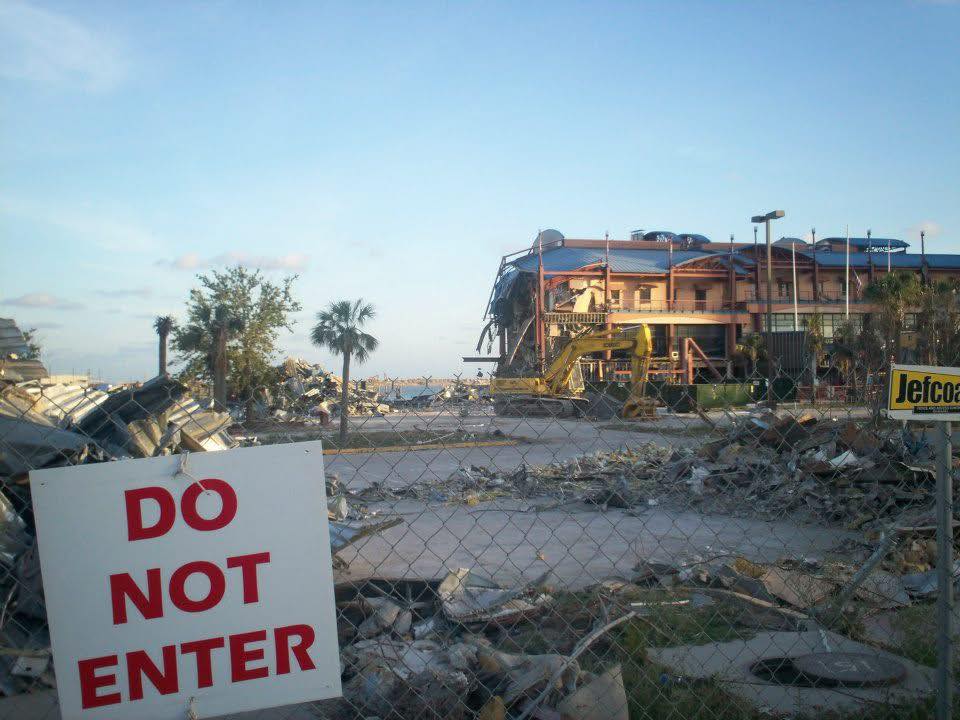
Somewhere between 230 and 300 people in Mississippi died during Katrina or its immediate aftermath. Well over a million people throughout the state were significantly affected by the devastation she left behind. Even for those who evacuated, Katrina was impossible to get away from. There was no one, absolutely no one who lived on the Mississippi coast that did not have their lives upended that infamous Monday morning.
As time marches on, the pre-Katrina Mississippi fades further and further from memory. My wife (who I in fact met as a direct result of the storms aftermath) often says to me: “I wish you could have seen it before Katrina. If only you could have known what it was like.”
In my hometown, the house I grew up in and the elementary school I attended still stand. The same cannot be said for thousands of people on the Mississippi coast. Katrina washed it all away. Gone. Never to return.
The first time I visited Biloxi in July 2006, I saw some of the aftermath for myself. At that time, much of highway 90 was still lined by gutted buildings and fallen trees. I had never seen anything like it, but what I was looking at was nothing compared to how the place looked on August 30, 2005. There are no words that can properly describe that.
In my 17 years living in Mississippi, I have developed a deep respect for those who survived Katrina. These people endured things I can barely imagine. Things that forever changed who they were. Things that made them wonder if they would ever truly have a home again.
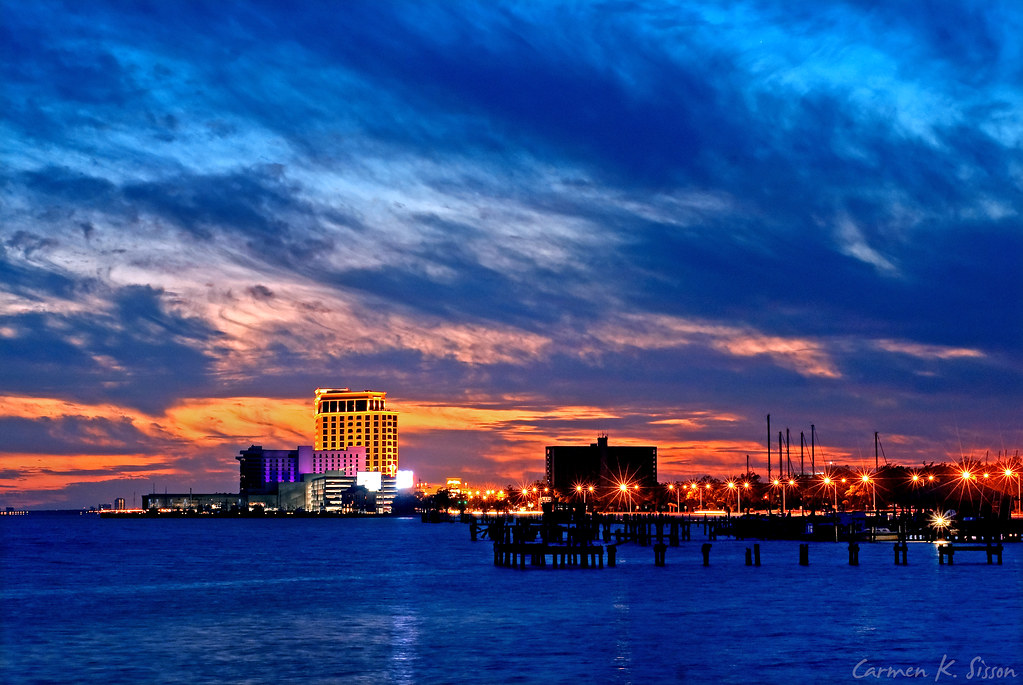
Even in 2025, beyond the glitter of the casinos and restaurants, the echoes of Katrina can still be found everywhere in south Mississippi: Empty, grass covered lots where houses and tourist attractions once stood. Patches of weeds covering spots of land that were previously home to hundred-year-old oak trees. Wide open swaths of beach that used to be filled with restaurants and hotels.
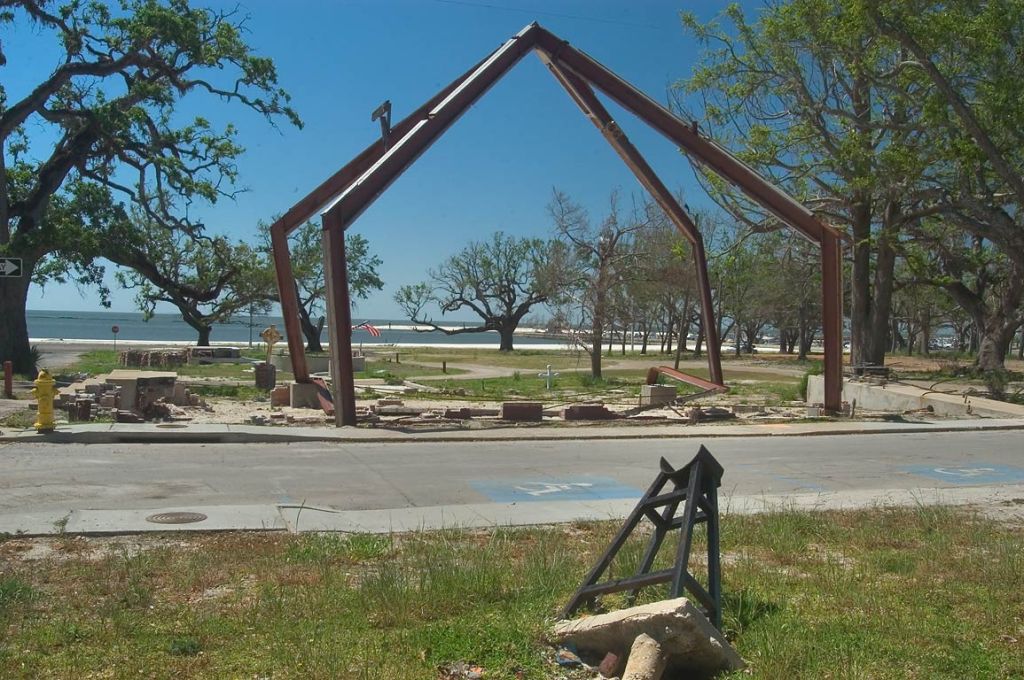
A mile to the east of the famous lighthouse you will find the Katrina memorial, dedicated not only to those lost during the storm but also to those who spent hours and days in the aftermath digging out and helping others do the same. Close to the memorial are two large wooden fish, carved out of trees that did not withstand Katrinas wrath. A half mile down the road, close to the beach, sits a somewhat pyramid shaped red frame. This is all that remains of the Church of the Redeemer. Katrina leveled the church. Although most of the debris was eventually cleared from the site, this frame was left intact. An historical marker now sits nearby, reminding visitors of what once was.
More change is coming for Biloxi. Who knows how it will look another 20 years from now?
Of course there will never be another Katrina. After that storm demolished the Mississippi coast and flooded New Orleans, the name was retired out of respect for the victims.
But there will be another big one someday. When you live in a hurricane zone, it’s never an “if” and always a “when”. Those who lived through Katrina hope the “when” will be a long time from now, but they don’t know for sure.
What they do know is they will keep telling their stories. The lessons of Katrina will continue to be passed down. Mississippi will keep building back.
And God willing, in another 20 years from now and beyond, that lighthouse will still be shining brightly.





 The Forlorn Poet
Leave a comment